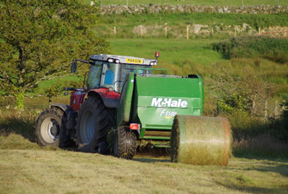
Producing export-grade oat hay requires more than good crop management and a reliable baler. When bales are compressed to high densities for transport from South Australia and Victoria to overseas markets, baler twine must withstand substantial tension without breaking, slipping, or losing its hold. A weak binding system can lead to loose bales, handling problems, and product damage during storage and transport.
For commercial hay growers, selecting the right polypropylene twine means considering knot strength, tensile performance, bale density, and the demands of mechanical handling. HD baler twine for export oat hay is designed for applications where dependable bale retention is essential.
Why High-Density Oat Bales Need Strong Twine
High-density baling places considerable strain on both the baler and its binding material. As the baling chamber compresses dry oat hay, the twine must be strong enough to hold the bale together after the compression force is released and the bale leaves the chamber.
This is particularly important when bales are stacked, transported, loaded into containers, or handled repeatedly before reaching their destination.
Suitable baler twine should provide:
● High tensile strength for dense bales
● Reliable knot performance
● Consistent diameter for dependable baler operation
● Resistance to stretching under tension
● Good handling characteristics during feeding and tying
Choosing twine based only on price can create problems if it cannot match the pressure generated by high-density baling.
Choosing HD Polypropylene Twine for Export Hay
High-density polypropylene twine is widely used for demanding agricultural baling applications because polypropylene offers a useful combination of strength, flexibility, and moisture resistance.
For South Australian and Victorian oat hay producers, the right specification should match the baler’s operating requirements and the density of the finished bale. The twine should also work reliably with the knotter system, not just have high nominal strength.
Knot Strength Matters
Tensile strength is only part of the equation. The knot is critical because the twine must stay secure after the baler ties each bale.
Poor knot performance can cause broken or loose bindings, particularly when dense bales are handled or when tension remains high after ejection. HD baler twine for oat hay applications therefore requires dependable knot strength and strong straight-line performance.
Match Twine to Bale Density
Not every oat hay operation produces the same bale. Bale size, density, crop moisture, baler settings, and harvesting conditions can all influence the load placed on the twine.
Before purchasing, growers should check:
1. The baler’s recommended twine specifications.
2. The twine’s tensile and knot-strength ratings.
3. Compatibility with the knotter and needle system.
4. The expected density and size of finished bales.
5. Handling and storage conditions after baling.
This approach helps reduce binding failures without unnecessarily selecting a product that is unsuitable for the machine.
Supporting Export-Ready Bale Handling
Export hay may pass through several handling stages before reaching the customer. Loaders can move bales, stack them in storage, transport them by road, and prepare them for containerised or other forms of international freight.
A dependable agricultural packaging helps maintain bale integrity throughout these stages. Consistent binding is especially important for commercial operations where large quantities of hay need to be processed efficiently and presented in a uniform condition.
For growers in Victoria and South Australia, selecting twine suited to high-density oat hay can therefore support both baling efficiency and downstream handling.
Select Twine for the Whole Baling System
The best twine is not simply the one with the highest strength specification. It needs to work as part of the complete baling system, including the baler, knotter, bale density, crop condition, and intended handling process.
For commercial oat hay production, discuss HD baler twine export oat hay requirements with a knowledgeable agricultural twine supplier before committing to a product.
Conclusion
High-density export oat hay demands reliable bale binding from the field through storage and transport. Baler twine with suitable tensile and knot strength can help maintain bale integrity when compression and mechanical handling place greater demands on the binding system.
If you produce export-grade oat hay in South Australia or Victoria, review your current twine specification against your baler settings and target bale density. Speak with an agricultural twine supplier to identify an HD polypropylene product suited to your equipment and export handling requirements.
—
Frequently Asked Questions
1. Why is baler twine important for high-density oat hay?
It holds compressed bales together after they leave the baling chamber and during subsequent handling, stacking, and transport.
2. What is HD baler twine for export oat hay?
It is high-density baling twine selected for applications where compressed oat hay places greater tension on the binding material.
3. Is polypropylene suitable for oat hay baling?
Polypropylene is commonly used for agricultural baling because it combines strength, flexibility, and moisture resistance.
4. Does knot strength matter as much as tensile strength?
Yes. A twine may have strong straight-line performance but still require reliable knot strength to maintain secure bale binding.
5. How should growers choose baler twine?
Match the twine to the baler’s specifications, knotter system, bale density, bale dimensions, crop conditions, and expected handling requirements.