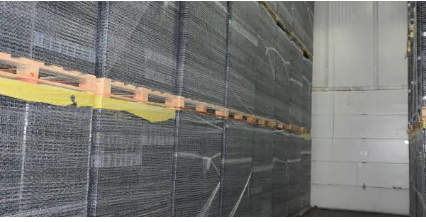
Australia’s cold chain industry is rapidly embracing automation to improve productivity, reduce labour costs, and maintain product quality. Pallet freezer spacers have become an essential component in modern refrigerated and frozen storage facilities, helping businesses optimise airflow while supporting automated material handling systems. Whether used in food processing plants, pharmaceutical warehouses, or logistics hubs, these specialised spacers help ensure safer, more efficient cold storage operations.
As automated warehouses become more common across Australia, understanding how pallet freezer spacers work alongside advanced handling equipment can help businesses maximise both storage capacity and operational performance.
The Rise of Warehouse Automation in Australia’s Cold Chain
Australian businesses are investing heavily in warehouse automation to meet growing demand for frozen foods, fresh produce, seafood, dairy products, and temperature-sensitive pharmaceuticals. Automated Storage and Retrieval Systems (ASRS), robotic pallet handling, and conveyor-based transport reduce manual intervention while improving inventory accuracy.
However, automation alone cannot guarantee optimal freezer performance. Storage accessories must also be compatible with automated systems. This is where pallet freezer spacers deliver significant value by ensuring pallets maintain consistent spacing for airflow without interfering with robotic handling equipment.
The combination of automation and intelligent pallet spacing creates a more reliable and energy-efficient cold storage environment.
Why Airflow Matters in Automated Freezers
Maintaining even airflow throughout a freezer warehouse is critical for preserving product quality. Without sufficient air circulation, cold air cannot move effectively between stacked pallets, resulting in uneven temperatures and longer freezing times.
These airflow benefits become even more valuable in automated facilities, where pallets remain in storage for extended periods and manual adjustments are minimal.
Supporting Robotic Pallet Handling
Modern automated warehouses rely on predictable pallet dimensions and stable load positioning. Equipment such as robotic palletisers, automated forklifts, shuttle systems, and ASRS cranes requires consistency to minimise handling errors.
Properly designed pallet freezer spacers help maintain uniform pallet alignment while preventing loads from shifting during storage or transport. Their consistent dimensions enable automation equipment to identify and retrieve pallets accurately.
Benefits for automated handling include:
● Improved pallet stability
● Reduced handling interruptions
● Lower risk of product damage
● Better compatibility with robotic systems
● Increased operational efficiency
These advantages help warehouses achieve smoother workflows with fewer unexpected stoppages.
Enhancing Workplace Safety
Although automation reduces manual labour, warehouse staff still interact with storage systems during maintenance, inspections, and order fulfilment. Stable pallet configurations reduce potential hazards associated with shifting loads.
Pallet freezer spacers contribute to safer warehouse operations by helping maintain secure spacing between pallet stacks. They also reduce the need for workers to manually reposition pallets inside freezing environments, minimising exposure to extremely low temperatures.
For Australian businesses focused on workplace health and safety, combining automation with reliable storage accessories supports safer daily operations.
Improving Energy Efficiency
Energy consumption represents one of the largest operating expenses for frozen storage facilities across Australia. Inefficient airflow forces refrigeration equipment to work harder to maintain target temperatures.
By promoting consistent airflow of cold air, pallet freezer spacers help refrigeration systems cool products more evenly. Improved airflow can reduce compressor workload, minimise temperature fluctuations, and improve freezer efficiency.
When integrated into automated warehouses, these savings become increasingly significant as facilities operate continuously throughout the year.
Lower energy use also supports sustainability initiatives by reducing greenhouse gas emissions from refrigeration systems.
Compatibility with Modern Warehouse Equipment
Today’s automated facilities use a variety of technologies that require storage components to perform reliably under demanding conditions.
Quality pallet freezer spacers are commonly designed for compatibility with:
● Automated Storage and Retrieval Systems
● Robotic pallet handling equipment
● Conveyor systems
● Automated guided vehicles (AGVs)
● Warehouse management systems
● High-density pallet racking
Selecting spacers engineered for automated environments helps ensure consistent operation without disrupting warehouse workflows.
Choosing the Right Pallet Freezer Spacers
Australian warehouse operators should evaluate several factors before selecting pallet freezer spacers for automated facilities.
Important considerations include:
Material Durability
Spacers should withstand prolonged exposure to freezing temperatures without cracking, warping, or becoming brittle.
Load Capacity
Heavy pallet loads require spacers capable of supporting substantial weight while maintaining structural integrity.
Dimensional Consistency
Uniform manufacturing ensures automation systems can reliably detect and handle pallet loads.
Hygiene Requirements
Food and pharmaceutical operations often require materials that are easy to clean and moisture-resistant.
Operational Compatibility
The chosen spacer design should integrate smoothly with existing warehouse automation and racking systems.
Careful product selection helps maximise both equipment performance and long-term operational reliability.
The Future of Automated Cold Storage in Australia
Australia’s cold storage industry is expected to continue investing in automation as labour shortages, rising operating costs, and increasing consumer demand drive innovation. Smart warehouses will increasingly combine robotics, artificial intelligence, predictive maintenance, and data analytics to optimise operations.
Despite these technological advances, physical storage components remain essential. Pallet freezer spacers will continue supporting efficient airflow, reliable pallet positioning, and seamless integration with automated handling systems.
As automation technologies become more sophisticated, demand will likely grow for spacer solutions specifically engineered to complement robotic operations and high-density storage environments.
Conclusion
Automation is transforming Australia’s cold storage sector, but achieving maximum efficiency requires more than advanced robotics. Pallet freezer spacers play a vital supporting role by improving airflow, enhancing pallet stability, reducing energy consumption, and ensuring compatibility with automated handling systems.
For Australian warehouses seeking greater productivity, improved product quality, and lower operating costs, integrating pallet freezer spacers into automated freezer operations represents a practical investment. By combining intelligent storage design with advanced automation, businesses can build more resilient, efficient, and future-ready cold chain facilities.