Four-Wheel Drive vehicles feature more components and systems that require regular inspection than standard 2-wheel drive cars, such as front, centre and rear differentials, drive shafts and axle differentials.
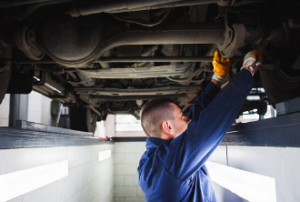 Driving over difficult terrain puts undue strain on 4WD vehicle systems, leading to premature wear. Regular are 4WD more expensive to service Adelaide will extend their lifespan and help extend their useful lifespan.
Brakes
Your 4WD vehicle’s brakes are essential in helping it come to a halt, particularly on rough or rocky terrain when carrying a heavy load and sporting modifications.
A disc brake system uses a rotor that fits around a set of brake pads held in place by callipers, which are then used when applying brake pressure to squeeze them against the rotor and create friction to slow your car. If any one or more callipers malfunction, your 4WD may not slow as effectively as intended.
As brakes must use heat to work effectively, they must also receive sufficient braking force to function. Therefore, hard or prolonged braking should be avoided as this will increase wear on your brakes and decrease safety on the road. In addition, regularly flushing out your brake fluid will keep it fresh and free of moisture that could corrode its system and compromise it further.
Transfer Case
Four-wheel drive vehicles employ transfer cases to distribute engine power between their front and rear axles, improving traction on uneven terrain, towing capacity, and hauling loads. They may operate independently from their transmission or be attached. Some even have features to switch between 4WD and 2WD depending on driving conditions automatically.
If your transfer case is malfunctioning improperly, it can result in difficult gear shifts, grinding noises, and fluid leaking underneath your vehicle. Whether or not your vehicle uses two-wheel or four-wheel drive mode, regular inspection of its transfer case for signs of wear should occur to detect potential damage or wear and tear.
Be proactive and schedule regular four-wheel drive maintenance to minimise costly repairs. Adherence to the service schedule recommended by your manufacturer will help your vehicle run at peak performance, with smoother and more efficient operation from its four-wheel drive system because of good working condition transfer case components.
Differential
The differential, often called a gearbox, allows your vehicle’s wheels to turn at different speeds without skidding or binding, making it one of the key components in 4WD vehicles that give drivers ultimate control when travelling on rugged or snowy roads. Without it, control of their car would quickly slip away, risking them losing control during the drive.
Service technicians that inspect 4WD systems will typically examine the differential for signs of wear or damage as part of their inspection, drain and replace its fluid to ensure it has adequate lubrication – this is key as inadequate lubrication could lead to gear failure and cause more serious problems for your gearboxes.
4WD vehicles use an open differential. It consists of two halves equipped with gears on either end, forming three sides of a square, joined together by a third ring gear connected by another gear to power both wheels. Some locking differentials may also be utilised for added security purposes; rear differential oil should be changed every 35000 miles as determined by your owner’s manual.
Wheels
Four-wheel drive (or 4WD) systems connect the front and rear wheels of a pickup truck or SUV to provide superior off-road handling capabilities. Some newer vehicles feature an automatic mode that switches between two-wheel drive (2WD) and full-time 4WD depending on its sense of need, making this driving system unique to individual cars. Transfer cases, differentials and other components play key roles in creating this driving system.
Most older 4WD vehicles require driver input via either an electronic switch or mechanical lever that engages their internal transfer case to select four modes, such as “4-High,” “4-Low,” or other situations-specific modes designed specifically for specific situations – these systems were typically intended for slippery roadway conditions at lower speeds or off-road driving conditions.
Part-time four-wheel drive systems only activate when the driver selects 4WD mode on the multi-plate clutch coupling. These systems allow power to shift between the front and rear wheels as necessary but offer improved fuel economy, reduced tire wear, and less component wear than 2WD vehicles. However, when used on dry pavement, these systems create a “hopping” sensation as tires grip and slip alternately, leading to an unpleasant driving experience.